Modeling Landscape Evolution on Mars (in LandLab).
Using self-made code to generate crater topography. I have been working on modeling landscape evolution on cratered landscapes, using the open-source model framework LandLab. I am still working on the project results, and of course tidying code ready to upload to GitHub for all to use. So, watch this space! In the meantime, checkout the code to generate crater topography
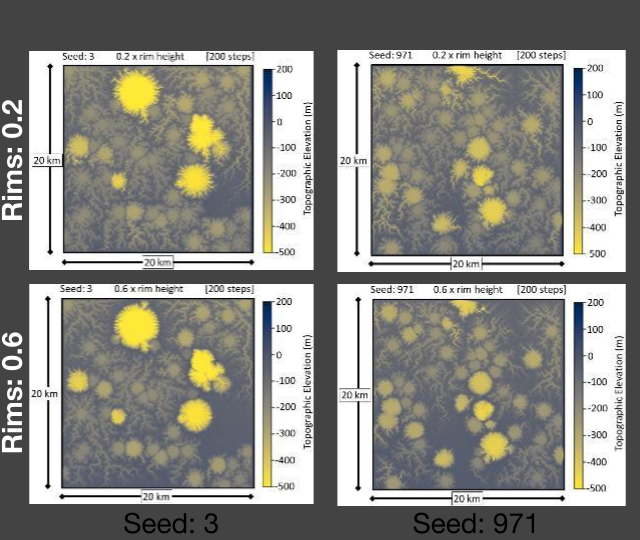
publication and code repository coming soon...
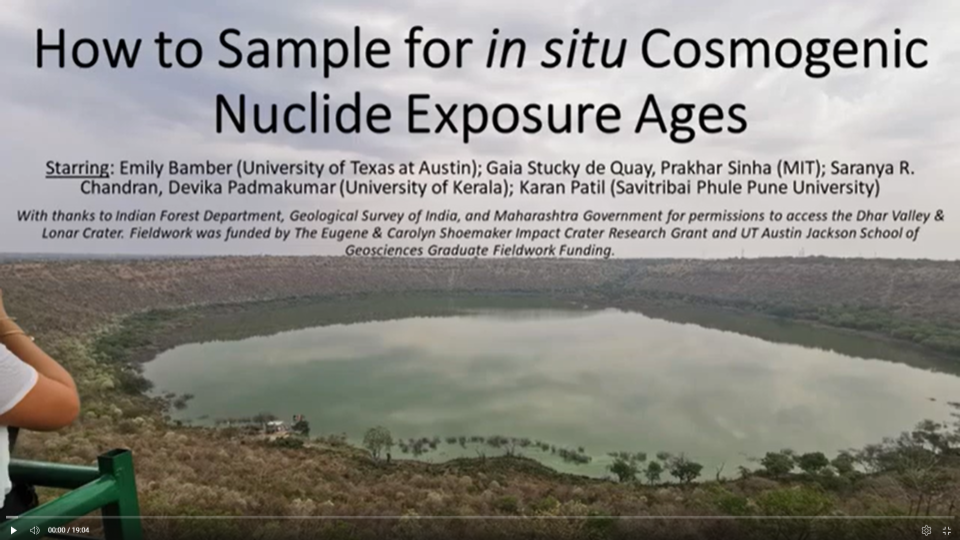
check out the instructional video on sampling for cosmogenic exposure age dating
Video: Sampling for in situ Cosmogenic Nuclide (CN) exposure age dating.
In this video, we detail the considerations, tools and methodology for sampling bedrock outcrops for in situ cosmogenic nuclide exposure age dating. I am using cosmogenic Helium-3 in my research, but the same methods apply broadly to any cosmogenic nuclide.
Python Crater Topography, compatible with LandLab.
During the 2021 Earth Surface Processes Institute (ESPIn) summer workshop, myself and Dr. G. Stucky de Quay created code to generate crater topography. The code is designed for use with the open-source landscape evolution model LandLab and I welcome anyone wanting to colalborate on generalizing it. The calculations and process is based on the Mars landscape evolution model detailed in Howard, (2007). The code has undergone some updates since 2021, and is is freely accessible on github.
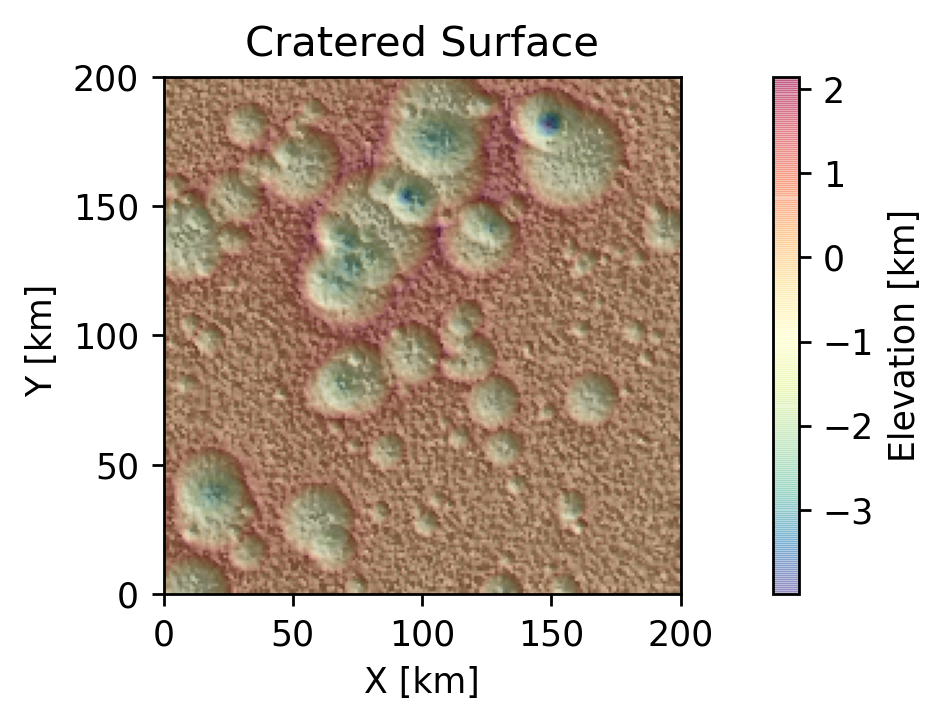
The code generates simulated crater topography as illustrated in this figure

Mars Satellite Data: Digital Elevation Models from Context Camera (CTX) images.
During the course of my research, I have generated CTX Digital Elevation Models (DEMs) and associated orthoimages, which, along with similar outputs frm across the UT Austin Planetary Surface group are archived in the Texas Data Repository.
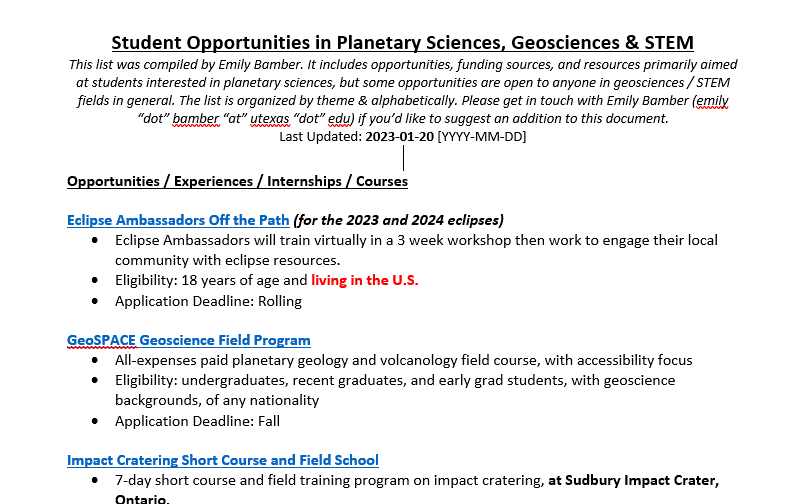
Student Opportunities in the Planetary Sciences
I put together a list of resources that are relevant for students in planetary sciences and geomorphology. It includes graduate fellowships, travel grants, training courses and networking groups! Opportunities for international scholars are highlighted. Please feel free to share widely and to contact me if you would like to see any of my successful applications.